-cutout.png)
What Happens If You Don't Have Gutters? What Homeowners Should Know

If you have ever wondered what happens if you don't have gutters, the answer depends on your home's design, roof, soil, and drainage. While some homes may be built to handle roof runoff without gutters, many homes can benefit from having a system that collects and directs rainwater away from the property.
Without gutters, rainwater runs directly off the edge of the roof. During a light rain, this may not seem like a big problem. But during a heavy South Texas storm, a large amount of water can fall from the roof and land close to your home.
Over time, that uncontrolled water can contribute to soil erosion, landscaping problems, water around the foundation, and damage to areas around the roofline.
For homeowners in the Rio Grande Valley, understanding how roof runoff works can help you make a better decision about your home's drainage.
What Happens to Rainwater Without Gutters?
A roof collects a large amount of rainwater.
When gutters are installed, that water is collected and directed toward downspouts. The downspouts then move the water away from the home.
Without gutters, the water simply falls from the roof edge.
Depending on your roof design, this can create concentrated streams of water around the perimeter of the home.
During heavy rain, those streams can become surprisingly powerful.
Water may:
Erode soil
Wash away mulch
Damage landscaping
Splash against exterior walls
Collect near the foundation
Create muddy areas
Enter low areas around the home
The problem is not necessarily one rainstorm. It is the repeated exposure to water over months and years.
What Happens If You Don't Have Gutters Around Your Foundation?
One of the biggest concerns is foundation protection.
When rainwater falls directly beside the house, it can saturate the soil around the foundation.
Depending on the type of soil and drainage conditions, repeated moisture can contribute to soil movement and other drainage concerns.
This does not mean that every home without gutters will develop foundation problems. Many factors affect foundation performance.
However, controlling roof runoff is an important part of managing water around your home.
In the Rio Grande Valley, this matters because heavy rainfall can deliver a large amount of water to the ground in a short period.
A gutter and downspout system gives homeowners more control over where that water goes.
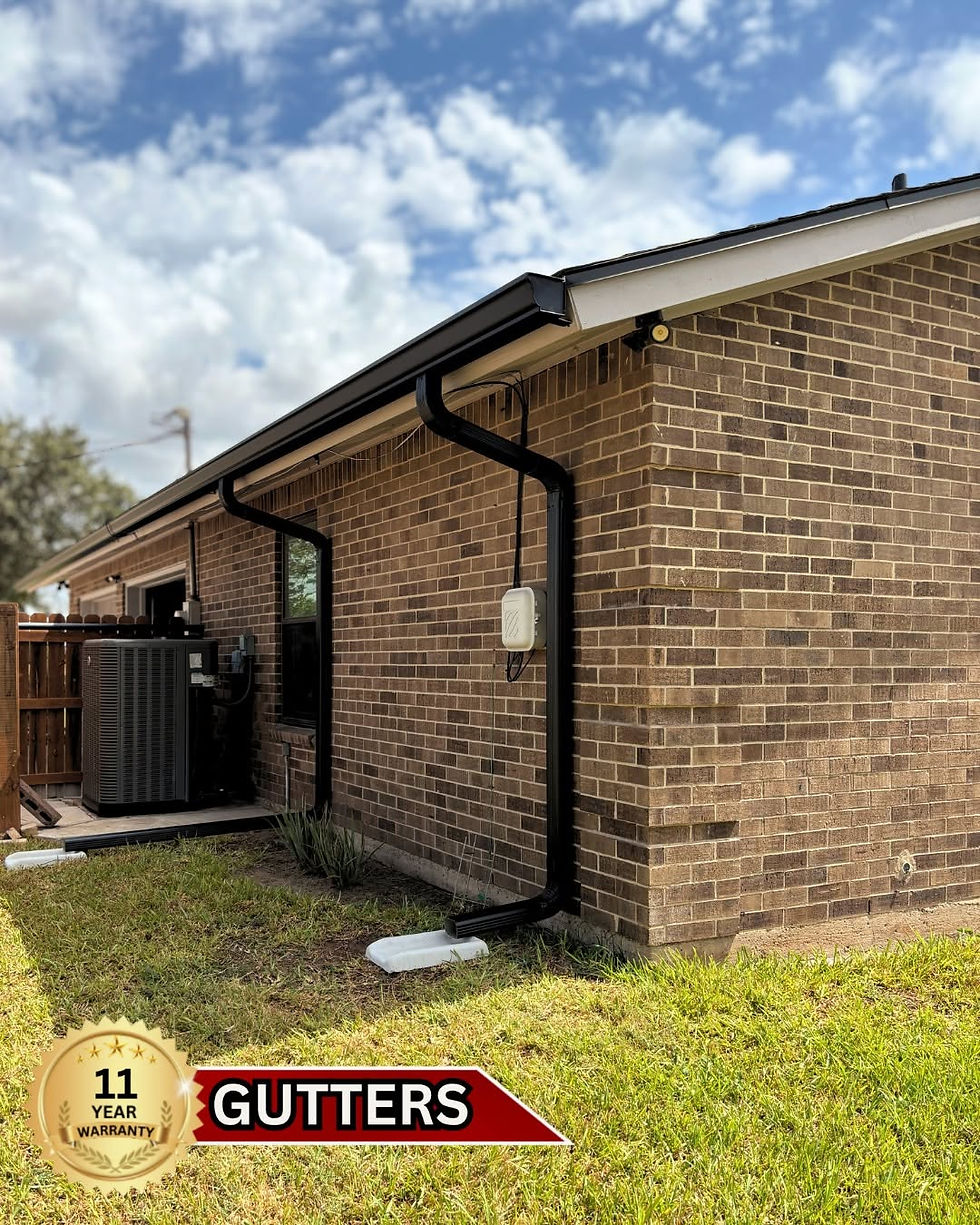
Your Landscaping May Take a Beating
Without gutters, rainwater falls directly onto the areas below the roof.
If your home has flower beds, mulch, decorative rock, or other landscaping around the foundation, repeated runoff can wash these materials away.
You may notice:
Exposed soil
Washed-out mulch
Muddy areas
Erosion
Damaged plants
Puddles
Gutters can help reduce these problems by directing water to specific areas through the downspouts.
This can make it easier to manage the flow of water around your property.
Can Rainwater Damage Exterior Walls?
Another concern is water splashing against the exterior of your home.
When rainwater falls from the roof, it can bounce off the ground and splash onto siding, brick, stucco, or other exterior materials.
Over time, repeated moisture and dirt exposure can leave stains and contribute to wear.
Gutters do not make your exterior completely waterproof, but they can help control where roof runoff lands.
This is one reason gutters are often considered part of a home's overall water management system.
What About the Roof and Fascia?
Gutters are installed along the roofline, so they can also help manage water around the fascia and soffit areas.
Without gutters, water simply leaves the roof edge without being collected.
This does not automatically mean the fascia or roof will be damaged. Proper roof design, flashing, overhangs, and other construction details also matter.
However, controlling runoff can reduce the amount of water that lands directly around the roofline and exterior of the home.
If you notice water stains, damaged fascia, or other signs of moisture, it is worth having the area inspected.
Are Gutters Necessary for Every Home?
No.
Some homes are designed with roof overhangs, grading, drainage systems, or other features that help manage rainwater without traditional gutters.
For example, a home may have a roof design that directs water away from the foundation or a property that naturally slopes away from the house.
The question is not simply whether every house must have gutters.
The better question is:
Where does the rainwater go when it leaves your roof?
If the answer is that it lands directly beside the foundation, causes erosion, or creates standing water, a gutter system may be worth considering.
How Much Does It Cost to Add Gutters?
Cost is an important part of any home improvement decision.
The price of a gutter system depends on factors such as:
Home size
Roof design
Number of downspouts
Gutter material
Installation requirements
Gutter guards
Access to the roofline
While gutters are an upfront expense, homeowners should also consider the potential cost of managing water damage.
A properly installed system can be part of long-term home maintenance and help protect areas that may be expensive to repair.
The goal should not be to install the most expensive system. It should be to install a drainage solution that fits your home and handles its water flow properly.
Gutters Are Only Part of the Drainage System
Installing gutters does not automatically solve every drainage problem.
Downspouts are just as important.
If downspouts release water directly beside the foundation, the gutter system may simply move the problem from the roof to the ground.
Downspouts should direct water toward an appropriate drainage area.
In some homes, homeowners may also benefit from extensions or other drainage solutions.
The entire system should work together:
Roof → Gutters → Downspouts → Safe drainage area
That simple path helps keep rainwater moving away from the home.
FAQ Section
Do all homes need gutters?
No. Some homes have roof designs, grading, or drainage systems that manage rainwater without traditional gutters. However, gutters can be helpful when roof runoff collects near the home.
Can not having gutters cause foundation problems?
It can contribute to drainage problems around the foundation. Without gutters, roof water may fall directly beside the home and saturate the surrounding soil. Proper grading and drainage are also important factors.
Are gutters worth the cost?
For many homeowners, gutters can be a worthwhile investment because they help control roof runoff and protect areas around the home. The value depends on your home's design, drainage, and local conditions.
What should I do if my home has no gutters?
Start by observing where rainwater goes during a storm. Look for standing water, erosion, soil washing away, or water collecting near the foundation. If these problems occur, consider having a gutter professional evaluate your home's drainage.
Conclusion
So, what happens if you don't have gutters? Rainwater will naturally run off your roof, but that does not mean it is going where you want it to go.
For some homes, natural drainage may be enough. For others, uncontrolled roof runoff can contribute to soil erosion, landscaping damage, water around the foundation, and exterior maintenance problems.
Homeowners in the Rio Grande Valley should pay close attention to drainage because heavy South Texas rain can put a lot of water on a property in a short amount of time.
A properly designed gutter and downspout system can help control that water and direct it away from important areas of your home.
David’s Aluminum provides seamless aluminum gutters, gutter guards, downspouts, gutter cleaning, and gutter installation throughout the Rio Grande Valley. The best gutter solution depends on your home's design, drainage needs, and long-term goals.
Contact Us Today
📞 Call: (956) 638-7153🌐 Visit: www.davidsaluminum.com
Will you decide to get gutters?


Comments