
How Much Rainwater Does the Average Roof Collect?

How much rainwater does the average roof collect? More than many homeowners realize. Even a small amount of rain can produce hundreds or thousands of gallons of water from a home's roof. The exact amount depends on the size of the roof and how much rain falls, but the basic idea is simple: the larger the roof and the heavier the rain, the more water needs to be managed.
That water has to go somewhere. Without a proper gutter and drainage system, it can fall directly next to the house, wash away soil, damage landscaping, or create excess moisture around the foundation.
Understanding how much water your roof collects can help explain why properly installed gutters, downspouts, and regular maintenance are important.
How Much Rainwater Does the Average Roof Collect?
The amount of rainwater a roof collects depends mainly on two things: roof area and rainfall.
A useful rule of thumb is that 1 inch of rain falling on 1,000 square feet of roof can produce about 623 gallons of water.
For example, if your roof has 2,000 square feet of surface area and your area receives 1 inch of rain, the roof could collect roughly 1,246 gallons of water.
That is a lot of water from just one inch of rain.
If a storm produces 2 inches of rain, that same roof could collect about 2,492 gallons. A larger roof would collect even more.
This is why homeowners may see gutters overflowing during heavy storms. The problem is not necessarily that the gutters are "bad." There may simply be a very large amount of water moving through the system in a short period of time.
Why Roof Size Matters
When people think about the size of a home, they usually look at the square footage of the living space. However, the roof area used for rainwater collection can be different.
A home may have multiple roof sections, different slopes, additions, patios, or other structures that affect how water flows.
Two homes with the same living area may have very different roof drainage needs.
A roof with a large surface area collects more water. That water then needs to be collected and moved through the gutter system.
This is one reason gutter installation should be based on the home's actual drainage needs instead of simply choosing a standard gutter size for every property.
The number and placement of downspouts also matter. A gutter system needs enough outlets to move water away efficiently.
What Happens to All That Water?
Once rainwater reaches the roof, it typically flows toward the lower edges of the roof.
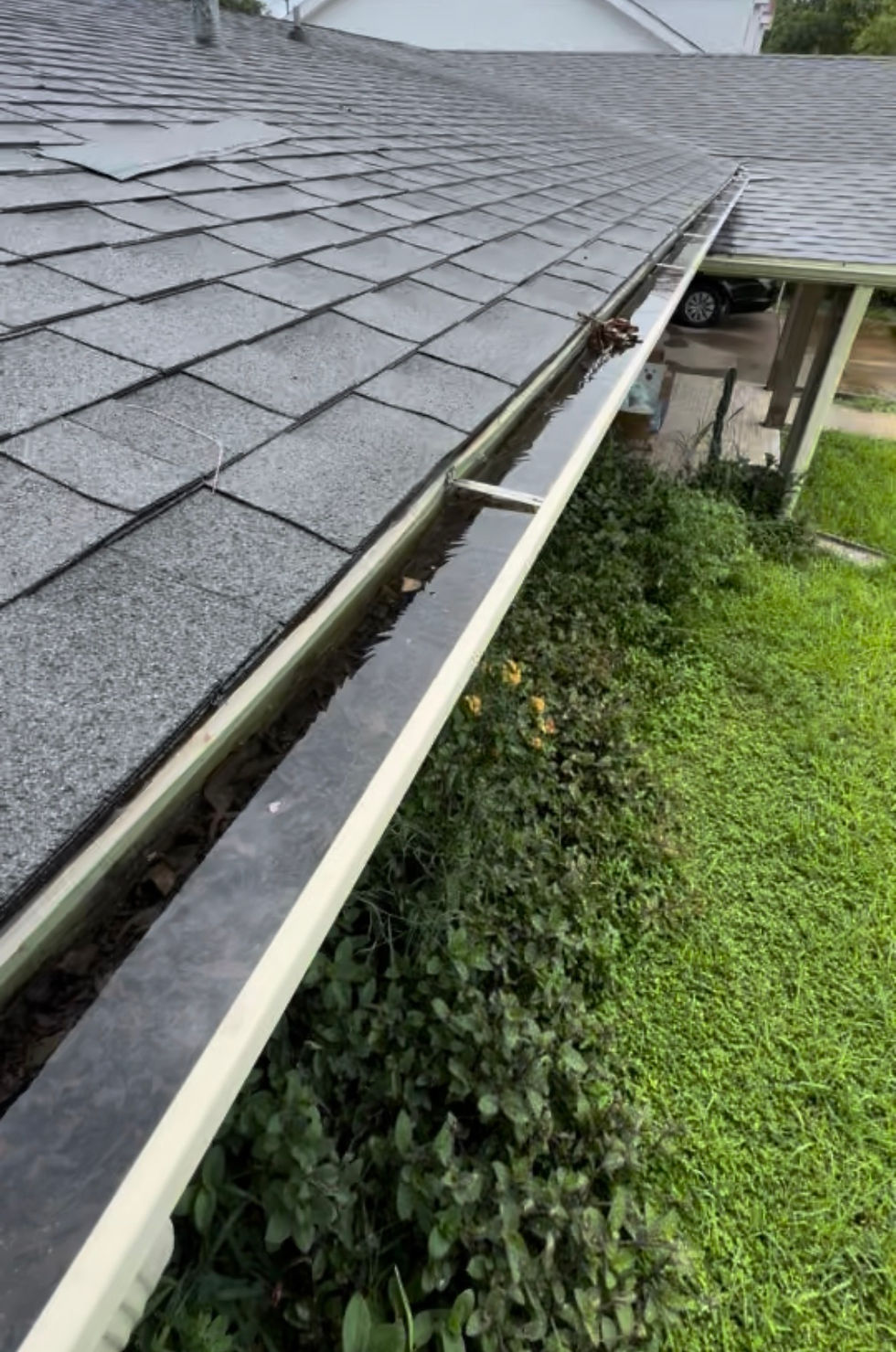
If gutters are installed, they collect the water and move it toward downspouts. The downspouts then carry the water to the ground.
Ideally, the water is released in an area where it can drain safely away from the home.
Without gutters, rainwater may fall directly from the roof edge. During a heavy storm, this can create a concentrated stream of water next to the house.
That can lead to:
Soil erosion
Washed-away mulch
Damaged plants
Muddy areas
Water pooling near the foundation
Moisture concerns around the home
The goal of a gutter system is not to stop rainwater. It is to control and redirect it.

Why This Matters for Foundation Protection
Foundation protection is one of the biggest reasons homeowners should pay attention to roof runoff.
If hundreds or thousands of gallons of water are repeatedly released next to the house, the surrounding soil can become saturated. Depending on the property's grading and soil conditions, this may contribute to drainage and moisture problems.
Properly working gutters and downspouts help move roof runoff away from the foundation.
However, the downspout location is just as important as the gutter itself. A downspout that releases water directly beside the foundation may simply move the problem from the roof to the ground.
Homeowners should watch what happens after heavy rain. If water regularly pools near the house, flows toward the foundation, or creates deep erosion around a downspout, the drainage system may need attention.
How Heavy Rain in South Texas Can Affect Your Gutters
Homeowners in the Rio Grande Valley know that rain can come down quickly during thunderstorms and tropical weather.
A storm that drops several inches of rain can put a significant amount of water through your roof drainage system in a short time.
For example, a 2,000-square-foot roof could collect approximately 1,246 gallons from just 1 inch of rain. If a storm brings 3 inches, that could mean roughly 3,738 gallons of water.
That water must travel somewhere.
This is why gutters and downspouts should be kept clear and properly maintained. A clogged gutter or downspout can prevent water from moving through the system when you need it most.
Gutter guards may help reduce the amount of leaves and debris entering the gutters, but they do not eliminate the need for inspections and maintenance.
Can Your Gutters Handle the Amount of Water?
Knowing how much water your roof can collect raises another important question: Can your gutter system handle it?
A properly designed system considers several factors, including:
Roof size
Roof design and slope
Local rainfall
Gutter size
Number of downspouts
Downspout size
Gutter slope
Drainage conditions around the home
If your gutters consistently overflow during heavy rain, do not automatically assume that you simply need larger gutters.
Overflow can also be caused by clogged gutters, blocked downspouts, poor installation, improper slope, or drainage problems.
Regular gutter cleaning can help prevent simple blockages. If overflow continues after the system is clean, it may be worth having the entire drainage setup evaluated.
Is Investing in a Better Gutter System Worth It?
Cost is naturally part of any home improvement decision. Homeowners want to know whether a new gutter system will provide enough value to justify the expense.
The answer depends on the condition of the current system and the needs of the property.
A system that repeatedly leaks, overflows, or sends water toward the foundation may create ongoing maintenance costs. Replacing or improving the system may make more sense in the long run.
Seamless aluminum gutters are one option homeowners may consider because they have fewer seams than sectional gutters. Fewer seams can mean fewer potential areas for leaks to develop.
Long-term durability also matters. A properly installed gutter system that is maintained regularly can help manage thousands of gallons of roof runoff over its service life.
The goal should not be to spend the most money. It should be to have a system that properly manages the amount of water your home receives.
FAQ: How Much Rainwater Does the Average Roof Collect?
How many gallons of water does 1 inch of rain produce on a roof?
Approximately 623 gallons of water can be collected from 1 inch of rain falling on 1,000 square feet of roof area. The actual amount can vary slightly based on roof conditions and other factors.
Does a bigger roof collect more rainwater?
Yes. A larger roof has more surface area for rainfall to land on, so it can collect more water during the same storm. This is one reason larger roofs may require careful gutter and downspout planning.
Can too much rain cause gutters to overflow?
Yes. Heavy rainfall can overwhelm a gutter system, especially if the gutters are clogged, undersized, poorly sloped, or connected to too few downspouts. Very intense rainfall can also exceed the capacity of a system.
How can I prepare my gutters for heavy rain?
Keep gutters and downspouts clean, inspect them for damage, and make sure water is being directed away from the foundation. Gutter guards may help reduce debris, but the system should still be inspected and maintained regularly.
Conclusion
How much rainwater does the average roof collect? The answer can be surprising. Even 1 inch of rain can produce hundreds or thousands of gallons of water, depending on the size of the roof.
That water needs a safe path away from your home. Gutters collect it, downspouts move it toward the ground, and proper drainage helps keep it away from your foundation and landscaping.
For homeowners in the Rio Grande Valley, preparing for heavy rain is an important part of home maintenance. Keeping your gutters clean and making sure your downspouts are working properly can help your system handle the water your roof collects.
At David’s Aluminum, we provide seamless aluminum gutters, gutter guards, downspouts, gutter cleaning, and gutter installation. A good gutter system is not just about keeping water off your driveway, it is about giving thousands of gallons of rainwater a safer path away from your home.
Contact Us Today
📞 Call: (956) 638-7153🌐 Visit: www.davidsaluminum.com
Protect your home with gutters


Comments