
Where Does Rainwater Go After It Leaves Your Roof?

Where does rainwater go after it leaves your roof? It is a simple question that many homeowners do not think about until they notice water pooling around their house. Every time it rains, your roof collects a large amount of water. Without a proper drainage system, that water can fall directly beside your home and cause erosion, landscaping damage, or moisture problems near the foundation.
A properly designed gutter system gives rainwater a controlled path. Gutters collect water from the roof, downspouts move it toward the ground, and drainage solutions help direct it away from the house.
This is especially important in the Rio Grande Valley, where heavy rain can happen during thunderstorms, tropical weather, and other major storms. Understanding where your roof water goes can help you identify drainage problems before they become expensive repairs.
Where Does Rainwater Go After It Leaves Your Roof?
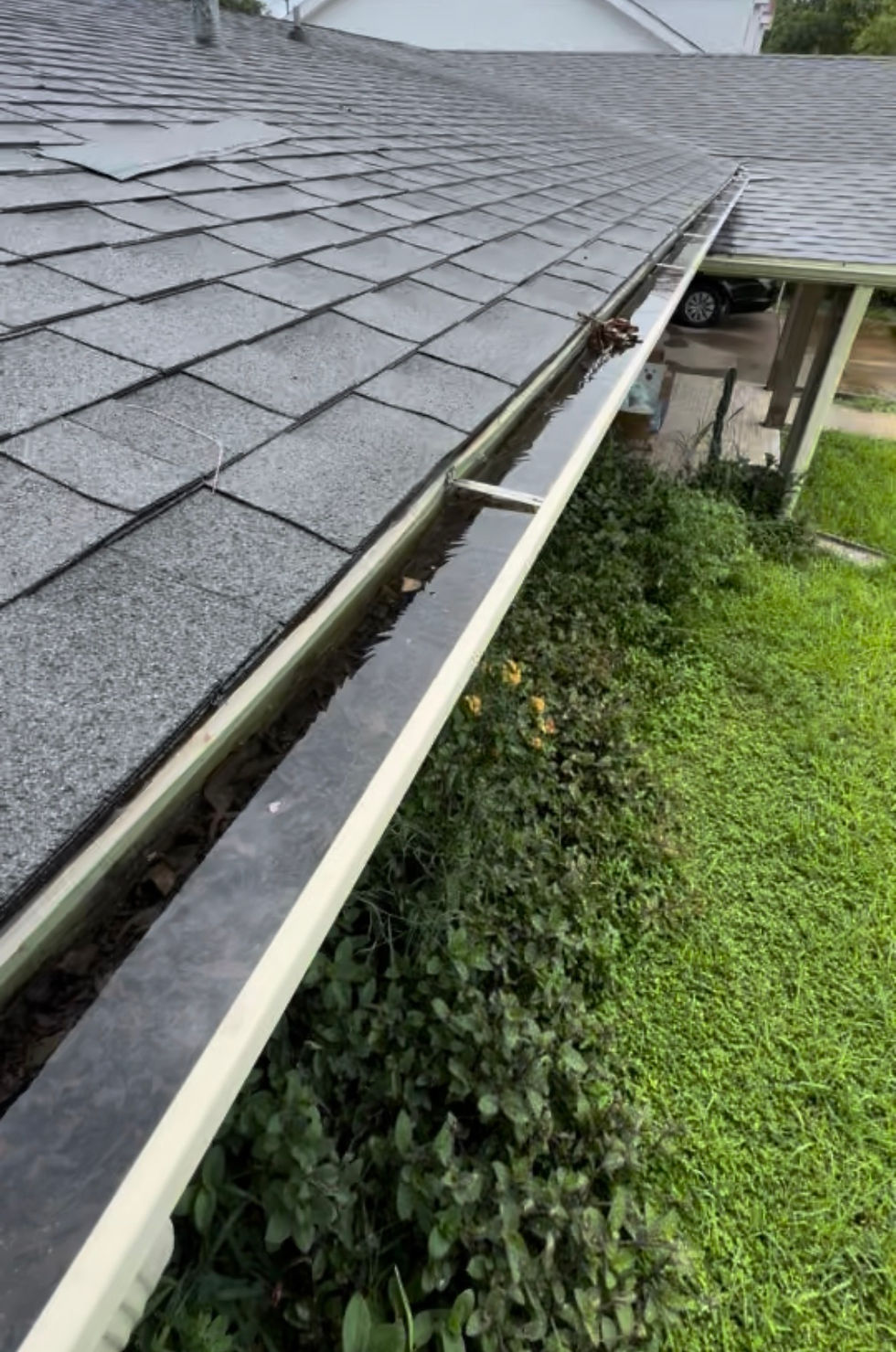
When rain falls on your roof, it follows the slope of the roof toward the edges. If your home has gutters, the gutters catch that water and carry it toward downspouts.
The basic path is:
Roof → Gutters → Downspouts → Drainage Area
The downspouts then release the water at ground level. From there, the water may flow across the yard, soak into the soil, enter a drainage system, or move toward another appropriate area depending on the property's grading and drainage setup.
Without gutters, rainwater may simply fall from the roof edge onto the ground below. A large roof can send a significant amount of water into a small area, especially during a heavy storm.
That concentrated runoff can wash away soil, move mulch, damage plants, and create standing water.
The goal of a gutter system is not to make rain disappear. It is to control where the rainwater goes.
Why Controlling Roof Runoff Matters
Rainwater is not necessarily a problem by itself. The problem is often where the water ends up.
When water repeatedly lands next to your home, it can soak the soil around the foundation. Depending on the soil, grading, and drainage conditions, this can contribute to moisture concerns.
Water runoff can also cause other types of rain damage, including:
Soil erosion
Washed-away mulch
Damaged landscaping
Muddy areas
Water pooling near the foundation
Staining on exterior walls
Moisture around doors and windows
Foundation protection is one reason proper drainage should be part of regular home maintenance.
Gutters do not guarantee that a home will never have foundation problems. However, they can help reduce uncontrolled roof runoff and give homeowners more control over where water is released.
How Gutters and Downspouts Work Together
Gutters and downspouts have different jobs, but they work as one system.
The gutters collect rainwater from the roof and move it horizontally. Downspouts then carry the water vertically toward the ground.
If either part has a problem, the entire drainage system can be affected.
For example, a clogged gutter may cause water to overflow before it reaches the downspout. A clogged downspout can prevent water from leaving the gutter. A downspout that ends too close to the foundation may move water out of the gutter but still leave it in the wrong place.
That is why homeowners should look at the entire path of the water.
Ask yourself:
Where does the water go when it leaves the downspout?
If the answer is "right next to my foundation," your drainage system may need an adjustment.
Downspout extensions, splash blocks, flexible drain hoses, or other drainage solutions may help move water farther away, depending on the property.

What Happens When Rainwater Is Not Directed Properly?
When rainwater does not have a clear path away from your home, problems can develop over time.
One common issue is soil erosion. Water flowing from a roof or downspout can wash away soil each time it rains. Eventually, you may notice a trench or low area forming near the house.
Landscaping can also suffer. Heavy runoff can move mulch, wash away soil, and damage smaller plants.
Another concern is standing water. If water repeatedly collects in the same area, the ground may have trouble absorbing it quickly enough. Poor grading can make the problem worse by directing water back toward the house.
Homeowners should walk around their property after a heavy rain and look for areas where water collects.
You may want to check:
Under the gutter edges
Around downspouts
Near the foundation
Around flower beds
Along walkways
In low areas of the yard
These simple observations can tell you a lot about how your property handles rainwater.
How to Improve Your Home's Rainwater Drainage
Good drainage starts with a gutter system that is properly installed and maintained.
Homeowners should keep gutters clear of leaves and debris so water can flow freely. Downspouts should also be checked for blockages.
Gutter guards can help reduce the amount of debris that enters the gutters. However, they do not remove the need for inspections and maintenance.
If gutters repeatedly overflow during heavy rain, the issue may be more than a simple clog. The gutter size, number of downspouts, gutter slope, roof area, and downspout placement may all need to be considered.
For some homes, a new gutter system may provide better long-term performance than repeatedly repairing an old or poorly designed system.
Seamless aluminum gutters are one option homeowners may consider because they have fewer seams than sectional gutters. Fewer seams can reduce the number of potential leak points.
Cost is important, but homeowners should also think about long-term value. A drainage system that properly manages rainwater can help reduce ongoing maintenance and protect areas around the home.
Why This Matters in the Rio Grande Valley
South Texas homeowners know that rain does not always arrive slowly. A short storm can sometimes produce a large amount of water in a relatively short period.
That makes rainwater management especially important.
A gutter system that handles light rain may still struggle during a major storm if it has clogged gutters, poor drainage, undersized downspouts, or other problems.
This is why regular gutter cleaning and inspections are important, especially before periods when heavy rain is expected.
Your home does not just need gutters. It needs a complete path for water to travel from the roof to a safe drainage area.
FAQ: Where Does Rainwater Go After It Leaves Your Roof?
Where should rainwater go after it leaves the roof?
Rainwater should be collected by the gutters, carried through downspouts, and released into an area where it can drain safely away from the home and foundation.
Can rainwater from my roof damage my foundation?
Uncontrolled roof runoff can increase the amount of water collecting near the foundation. Properly working gutters and downspouts can help direct that water away from the home and reduce unnecessary moisture around the foundation.
Do I need gutters on every side of my house?
Not necessarily. Gutter needs depend on the roof design, roof sections, drainage patterns, and where rainwater naturally flows. Some areas may require gutters while others may not.
What should I do if water pools near my downspouts?
First, check whether the downspout is clogged or releasing water too close to the house. A downspout extension or another drainage solution may help. If the problem continues, the property's overall grading and drainage should be evaluated.
Conclusion
Where does rainwater go after it leaves your roof? Ideally, it follows a controlled path from your roof into your gutters, through your downspouts, and away from your home.
That simple process can help reduce soil erosion, protect landscaping, limit unnecessary moisture near the foundation, and reduce rain-related damage.
For homeowners in the Rio Grande Valley, proper drainage is an important part of long-term home maintenance. Heavy storms can put a lot of water through a gutter system in a short amount of time, so keeping the entire system clean, properly installed, and working together matters.
At David’s Aluminum, we provide seamless aluminum gutters, gutter guards, downspouts, gutter cleaning, and gutter installation. The next time it rains, take a few minutes to watch where the water goes. You may learn more about your home's drainage system than you expect.
Contact Us Today
📞 Call: (956) 638-7153🌐 Visit: www.davidsaluminum.com
Let us help you take care of running water


Comments