
What Happens When Gutters Can't Handle Large Amounts of Rain?

What happens when gutters can't handle large amounts of rain? When a gutter system cannot collect and move rainwater fast enough, water may overflow, spill over the sides, or collect around the home. During a light rain, you may not notice a problem. But during a heavy storm, a gutter system that cannot keep up can quickly become a concern.
This matters for homeowners in the Rio Grande Valley because South Texas can experience periods of heavy rainfall, tropical storms, and fast-moving thunderstorms. Your gutters need to do more than simply catch water. They need to move that water safely away from your roof, walls, landscaping, and foundation.
Understanding why gutters overflow and what you can do about it can help prevent expensive repairs and improve long-term home maintenance.
What Happens When Gutters Can't Handle Large Amounts of Rain?
When gutters cannot handle the amount of water coming from the roof, the first thing homeowners often notice is gutter overflow.
Instead of flowing through the gutter and downspout, rainwater may spill over the front or back of the gutter. You may see water pouring from one section of the gutter like a waterfall.
This can happen for several reasons, including:
Gutters that are too small for the roof
Not enough downspouts
Clogged gutters
Clogged downspouts
Poor gutter slope
Improper installation
Heavy debris buildup
Downspouts that release water too close to the house
Sometimes the gutter itself is not the problem. The system may be collecting enough water, but the downspouts cannot move it away quickly enough.
A properly designed gutter system should consider the size of the roof, the amount of rainfall the area receives, and how water will be directed away from the property.
How Gutter Overflow Can Cause Rain Damage
Rainwater coming over the edge of your gutters can create several problems around your home.
Water may run down siding, walls, windows, and other areas that are not designed to handle large amounts of runoff. Over time, repeated exposure to water can contribute to staining, moisture problems, and damage to certain building materials.
Overflow can also damage areas directly below the gutters.
For example, water falling from a gutter may wash away mulch and soil. It can create trenches around flower beds or expose plant roots. If the water repeatedly hits the same area, the damage can become worse.
This is why it is important to pay attention to what happens during a heavy rainstorm. If you see water pouring over the sides of your gutters, do not assume it is normal just because the rain is heavy.
A gutter system should be inspected to determine why the water cannot keep up.
Why Too Much Rainwater Can Be a Foundation Concern
Foundation protection is another major reason homeowners should take gutter overflow seriously.
When rainwater is released next to the house, it can soak the soil around the foundation. The amount of risk depends on several factors, including soil type, grading, drainage, and the condition of the property.
A gutter system cannot prevent every foundation problem, but it can help control roof runoff.
Downspouts should direct water toward an appropriate drainage area instead of releasing it directly next to the foundation. In some situations, homeowners may also need downspout extensions, splash blocks, or other drainage solutions.
Look around your home after a heavy storm. Signs that water may not be draining properly include:
Standing water near the foundation
Muddy areas next to the home
Soil washing away
Water flowing toward the house
Erosion around downspouts
Repeatedly wet areas near the foundation
Good drainage is about managing water before it becomes a bigger problem.
Can Gutter Guards Help During Heavy Rain?
Gutter guards can help reduce the amount of leaves and debris that enter a gutter system. This can be useful for homeowners who regularly deal with clogged gutters.
However, gutter guards do not increase the basic capacity of a gutter system.
If your gutters are too small for your roof or your downspouts cannot handle the water flow, adding gutter guards will not automatically solve the problem.
Gutter guards also need maintenance. Dirt, small debris, seeds, and other material can collect on top of or around the guards and affect water flow.
During South Texas storms, your entire system needs to work together:
Roof → Gutters → Downspouts → Drainage Area
If one part of that system has a problem, water may not move away from the home as it should.
How to Prepare Your Gutters for Heavy Rain
Regular home maintenance can help your gutter system perform better when a major storm arrives.
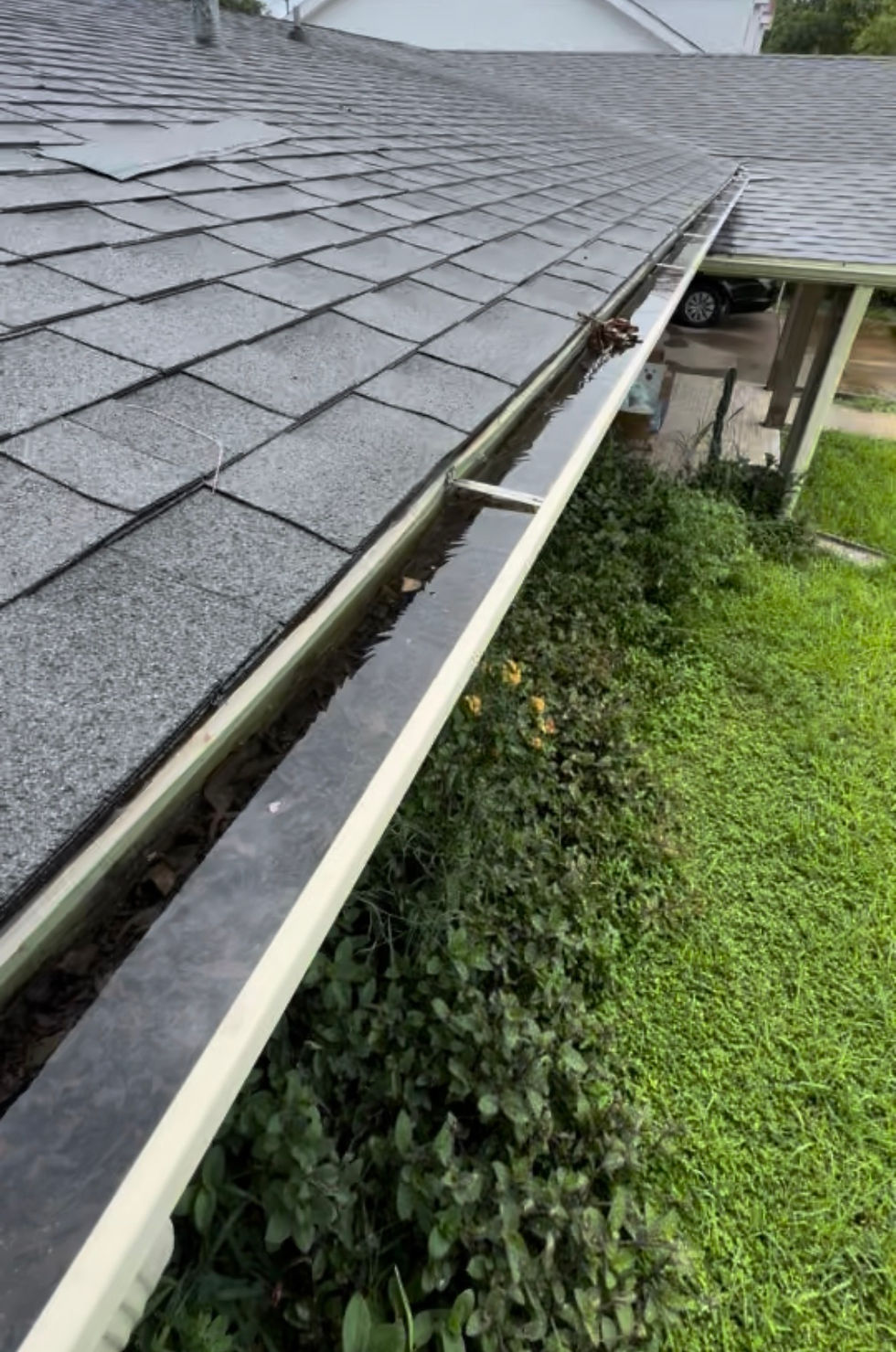
Before periods of heavy rain, homeowners should inspect their gutters and downspouts for visible problems. Make sure gutters are free of large amounts of debris and check that downspouts are not blocked.
It is also a good idea to look for gutters that are sagging, pulling away from the house, or holding standing water.
Some homeowners may benefit from professional gutter cleaning or an inspection, especially if the roof is difficult or dangerous to access.
If your system repeatedly overflows even when it is clean, the problem may be related to gutter size, downspout placement, slope, or overall design.
Fixing the cause is usually more useful than repeatedly cleaning the same problem area.
When Should You Consider New Gutters?
If your gutters are old, damaged, or consistently overwhelmed during heavy rain, replacement may be worth considering.
This does not mean every overflowing gutter needs to be replaced. Sometimes a simple cleaning, downspout repair, or extension can solve the problem.
However, homeowners should consider the long-term cost when making a decision.
Continuing to use a gutter system that cannot properly manage rainwater may contribute to repeated landscaping damage, moisture concerns, and other repairs. Spending a little more on a properly designed and durable system may provide better value over time.
Seamless aluminum gutters are one option homeowners may consider. Because they are made with fewer seams than sectional gutters, there are fewer joints where leaks can develop.
The right system depends on the home, roof size, drainage needs, and local conditions. The goal is not simply to install the biggest or most expensive gutter system. The goal is to create a drainage system that can handle the property's needs.
FAQ: What Happens When Gutters Can't Handle Large Amounts of Rain?
Why do gutters overflow during heavy rain?
Gutters can overflow when they are clogged, too small for the roof, poorly sloped, or connected to too few or undersized downspouts. Extremely heavy rainfall can also exceed the capacity of a system that normally works well.
Can overflowing gutters damage my foundation?
Overflowing gutters can send large amounts of water toward the foundation. While gutters are not a guarantee against foundation problems, properly directing roof runoff can help reduce unnecessary water buildup around the home.
Will bigger gutters stop overflow?
Larger gutters may help in some situations, but gutter size is only one part of the drainage system. Downspout size, number, placement, gutter slope, roof area, and local rainfall all need to be considered.
How can I tell if my gutters are not handling rain properly?
Watch your gutters during and after heavy rain. Water pouring over the sides, overflowing at certain sections, standing water near the foundation, soil erosion, or water collecting around downspouts can all indicate a drainage problem.
Conclusion
What happens when gutters can't handle large amounts of rain? The result can be more than a little water overflowing from the gutter. Poor drainage can contribute to rain damage, soil erosion, landscaping problems, and excess moisture around the foundation.
For homeowners in the Rio Grande Valley, preparing for heavy rain should be part of regular home maintenance. Keeping gutters and downspouts clean is a good starting point, but repeated overflow may mean the system needs a closer look.
At David’s Aluminum, we provide seamless aluminum gutters, gutter guards, downspouts, gutter cleaning, and gutter installation. A properly working gutter system should do one important job well: collect rainwater and move it safely away from your home.
Contact Us Today
📞 Call: (956) 638-7153🌐 Visit: www.davidsaluminum.com
Don't wait till your gutters overflow


Comments