
How to Redirect Rainwater Away From Your House

Learning how to redirect rainwater away from your house is an important part of protecting your home. Rainwater that collects around your house can wash away soil, damage landscaping, and create excess moisture near your foundation. During a heavy storm, a roof can collect hundreds or even thousands of gallons of water, so having a plan for where that water goes matters.
The good news is that homeowners have several ways to control rainwater. Gutters, downspouts, downspout extensions, splash blocks, and other drainage solutions can help give water a safer path away from the house.
For homeowners in the Rio Grande Valley, this is especially important. South Texas can experience heavy thunderstorms and tropical weather that can send large amounts of water toward your home in a short period of time.
How to Redirect Rainwater Away From Your House With Gutters
One of the most common ways how to redirect rainwater away from your house starts with a properly installed gutter system.
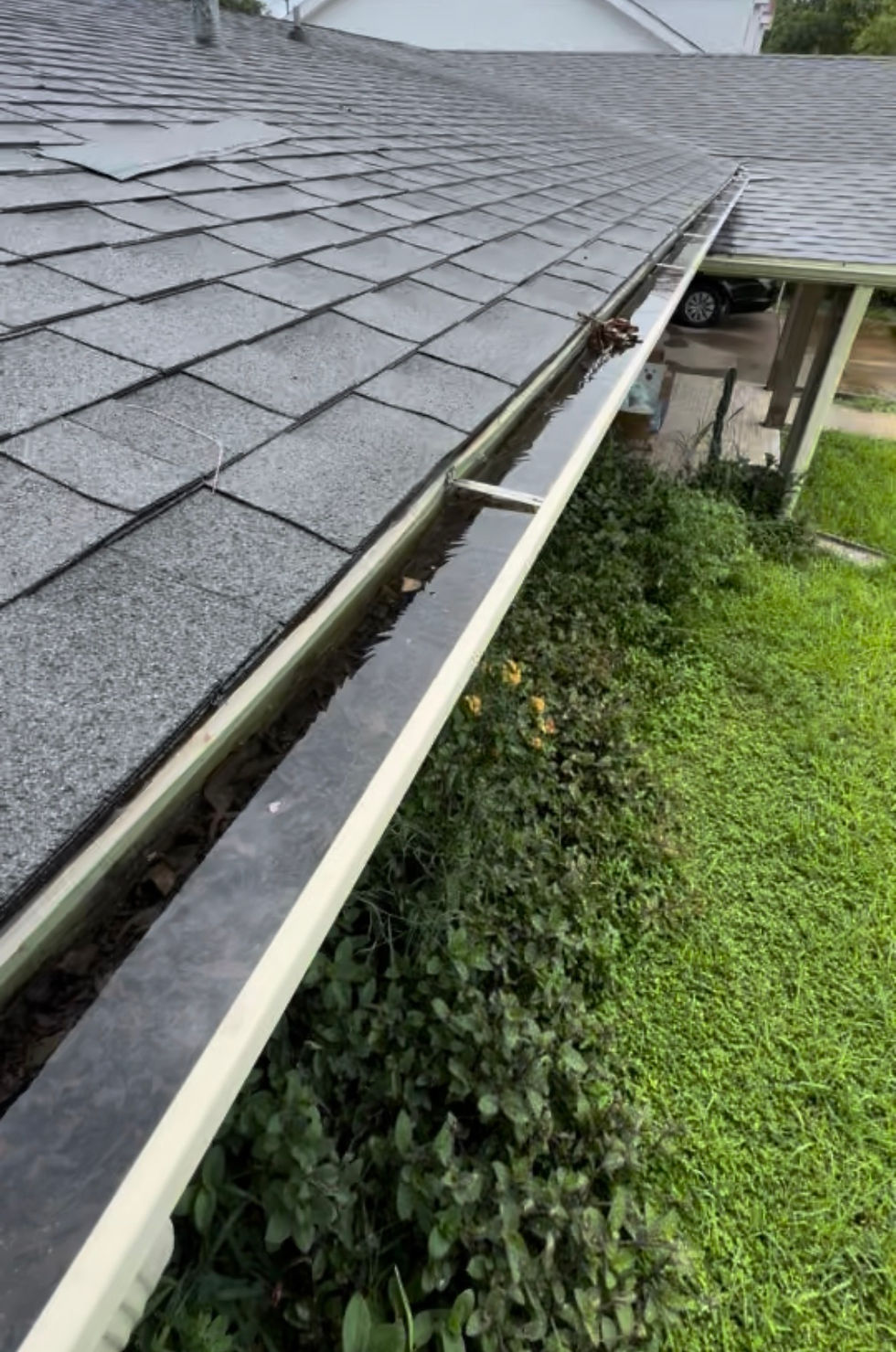
Gutters collect rainwater as it runs off the roof. Instead of allowing water to fall directly beside the house, the gutter carries it toward a downspout.
The basic process is:
Roof → Gutters → Downspouts → Drainage Area
Without gutters, water may fall from the roof edge in concentrated streams. Over time, this can create erosion and leave large amounts of water sitting close to the foundation.
Seamless aluminum gutters are one option homeowners may consider. They have fewer seams than sectional gutters, which can reduce the number of potential leak points.
However, simply having gutters does not guarantee proper drainage. The gutters need to be installed with the correct slope, connected to appropriate downspouts, and designed to handle the amount of water coming from the roof.
Use Downspouts to Move Water Away From the Foundation
Downspouts are one of the most important parts of a home's drainage system.
Gutters collect the water, but downspouts move that water from the roofline down to the ground. Where the downspout releases the water is just as important as having the downspout itself.
If a downspout ends directly next to your foundation, it may simply dump the roof water into the soil beside your home.
Depending on your property, a downspout extension may help move the water farther away.
Other options may include:
Downspout extensions
Splash blocks
Flexible drain hoses
Underground drainage systems
Properly graded drainage areas
The best solution depends on the property, soil, slope, and existing drainage.
The goal is simple: move roof runoff away from the foundation instead of allowing it to collect beside the house.
Improve the Grade Around Your Home
Your home's grading also affects where rainwater goes.
Ideally, the ground around the house should encourage water to move away from the foundation. If the ground slopes toward the home, rainwater may collect against the foundation instead.
This can be especially noticeable after a heavy storm.
Walk around your property and look for low areas where water collects. If water regularly sits near the house, grading or another drainage solution may be needed.
However, homeowners should be careful about moving large amounts of soil around the foundation themselves. Changing the grade incorrectly can create new drainage problems.
A professional may be able to determine whether the issue is caused by grading, gutters, downspouts, or a combination of factors.

Keep Gutters and Downspouts Clear
Even a properly designed drainage system will not work well if it is clogged.
Leaves, dirt, twigs, and other debris can block gutters and downspouts. When water cannot move through the system, it may overflow over the sides of the gutter or collect near the home.
Regular gutter cleaning is an important part of home maintenance.
Homeowners should look for:
Water overflowing from gutters
Gutters holding standing water
Clogged downspouts
Water pooling near the house
Soil erosion near downspouts
Gutters pulling away from the home
Gutter guards can help reduce the amount of debris that enters the gutters. However, gutter guards do not eliminate maintenance completely. They should still be inspected to make sure water can flow properly.
If your gutters continue to overflow after cleaning, there may be a larger problem with the system's design, size, slope, or downspout capacity.
Consider the Cost and Long-Term Drainage Needs
When deciding how to redirect rainwater, cost is naturally a concern. Some solutions are simple and inexpensive, while others may require more work.
For example, a homeowner may only need a downspout extension to move water away from a problem area. Another property may need a larger drainage solution because of poor grading or repeated standing water.
The cheapest option is not always the best long-term choice.
Think about the potential cost of ignoring the problem. Repeated water exposure can contribute to landscaping damage, soil erosion, moisture problems, and other repairs.
A durable gutter and drainage system should be viewed as part of long-term home maintenance.
The goal is not to spend the most money. It is to choose a solution that fits the property and properly manages the amount of rainwater your home receives.
How South Texas Rain Can Affect Your Drainage
Homeowners in the Rio Grande Valley need to think about more than light rainfall.
Heavy thunderstorms and tropical weather can send a large amount of water onto a roof in a short period of time. A drainage system that seems fine during a small rain may struggle when several inches fall quickly.
This is why homeowners should inspect their gutters and downspouts before and after periods of heavy rain.
Watch where the water goes.
Does it flow away from the house? Does it collect near the foundation? Is soil being washed away? Does water overflow from the gutters?
These observations can help you identify drainage problems before they become more expensive.
FAQ: How to Redirect Rainwater Away From Your House
What is the easiest way to redirect rainwater away from a house?
A properly installed gutter system with correctly positioned downspouts is one of the most common solutions. Downspout extensions or splash blocks can sometimes help move water farther away from the foundation.
How far should downspouts direct water from the house?
The appropriate distance depends on the property, grading, soil, and drainage conditions. The important goal is to prevent water from collecting directly beside the foundation.
Can gutters prevent rainwater from damaging my foundation?
Gutters can help control roof runoff and direct water away from the foundation. They cannot prevent every type of foundation problem, but proper drainage can reduce unnecessary water accumulation around the home.
Do gutter guards help with rainwater drainage?
Gutter guards can help reduce the amount of leaves and debris that enter the gutters, which may help maintain water flow. However, they do not replace regular inspections, gutter cleaning, or proper downspout drainage.
Conclusion
Knowing how to redirect rainwater away from your house can help you protect your home from many common water-related problems.
A good drainage system starts at the roof. Gutters collect rainwater, downspouts carry it toward the ground, and extensions or other drainage solutions can help move it away from the foundation.
Regular gutter cleaning and inspections are also important. If water continues to pool around your home or your gutters repeatedly overflow during heavy rain, the entire drainage system may need to be evaluated.
For homeowners in the Rio Grande Valley, preparing for heavy rainfall is an important part of long-term home maintenance. Properly managing rainwater can help protect your foundation, landscaping, and home from unnecessary water damage.
David’s Aluminum provides seamless aluminum gutters, gutter guards, downspouts, gutter cleaning, and gutter installation. A properly working gutter system gives rainwater a clear path away from your home, and that can make a big difference over time.
Contact Us Today
📞 Call: (956) 638-7153🌐 Visit: www.davidsaluminum.com
Let us help you redirect water away from your home


Comments